 home
home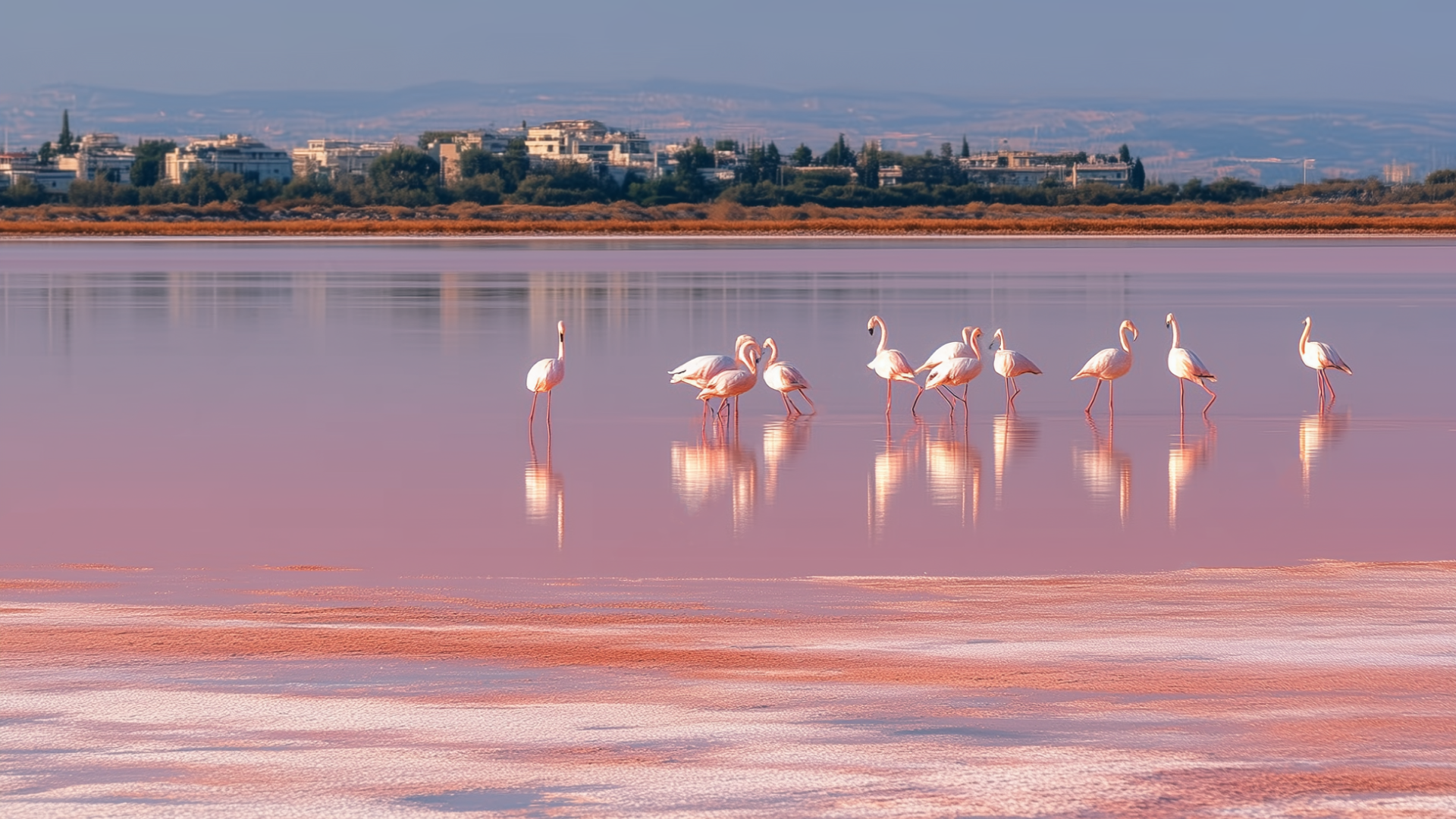
Cyprus’s pink salt lakes: Where nature paints in unexpected colors
During the height of summer, several of Cyprus’s salt lakes undergo a striking transformation. As the water evaporates under intense Mediterranean heat, the lakes take on shades of pink and rose — a phenomenon caused by microscopic algae and brine shrimp that thrive in highly saline conditions. These tiny organisms produce pigments that tint the water, creating surreal landscapes that feel almost otherworldly.
Among the most famous of these is Larnaca Salt Lake, a vast wetland that shifts dramatically with the seasons. In winter, it fills with shallow water and becomes a vital habitat for thousands of migratory birds. As summer approaches and the lake dries, salt crystals form across the surface, reflecting sunlight and enhancing the lake’s soft pink hues.
The salt lakes are also one of Cyprus’s most important wildlife sanctuaries. Each winter, flamingos arrive in large numbers, feeding on the brine shrimp that give the water its color. Their pale pink feathers mirror the lake beneath them, turning the landscape into a rare natural spectacle that attracts birdwatchers and photographers from around the world.
Beyond their beauty, these salt lakes play a crucial ecological role. Protected as wetlands of international importance, they support fragile ecosystems that depend on seasonal rhythms of rain, heat, and migration. In Cyprus, the pink salt lakes are more than a visual wonder — they are living reminders of how delicate, interconnected, and quietly spectacular nature can be.